For families
Turn a familiar machine into a conversation about evidence, choices, and responsibility.
A STEM + AI thinking book for ages 9-13
Explore 25 everyday machines, trace how each system works, and decide where AI belongs - with safety, privacy, and human control in mind.
Full color · 25 machines · AI design studios
Not every automatic machine uses AI.
Not every useful improvement needs AI.
Every design needs a human who asks good questions.
Five moves for every machine
STEM thinking starts with a familiar machine: observe the science, explain the technology, compare engineering choices, and reason about data. STEM stands for science, technology, engineering, and mathematics.
What useful job is the machine doing for a person?
Follow the energy, material, or information through its parts.
Name the sensors, rules, controls, and actions already present.
Compare possible changes, including options that do not use AI.
Ask what data it needs, what could fail, and who stays in control.
A look inside
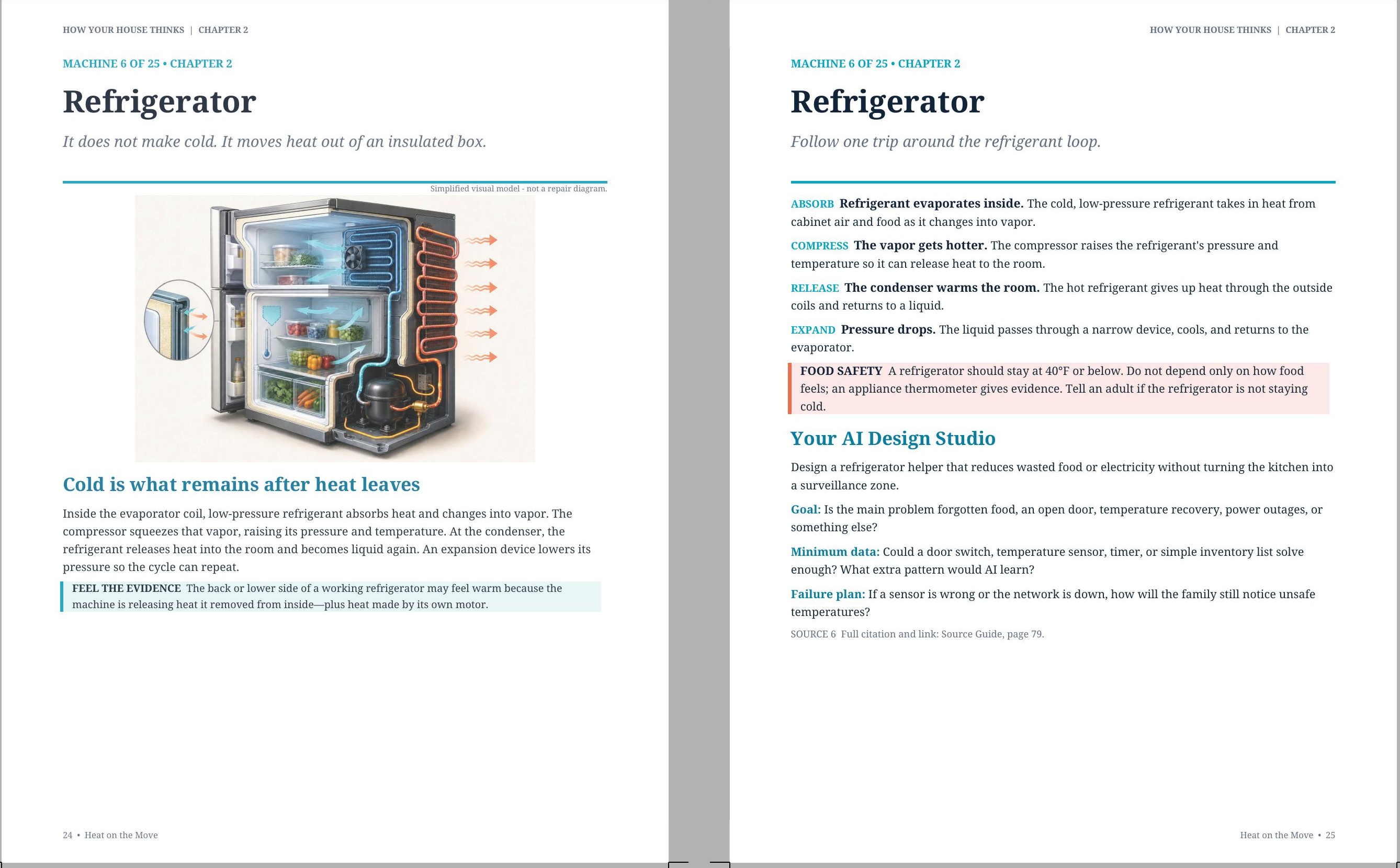
A refrigerator does not make cold. It moves heat. Once readers can trace that system, they can design an improvement and ask whether AI is actually the right tool.
Free STEM + AI activity · Families and classrooms
Plan for about 15 minutes to begin; take longer to discuss and draw. No screen, login, or child AI account is needed. Any optional AI extension is operated by an adult.
Choose one safe household machine. Map what goes in, what happens inside, and what comes out. Then decide whether AI would help - or only make the machine more complicated.
Download the free four-page activityMap the machine
Compare simpler options
Plan for failure
Decide who stays in control
For curious readers ages 9-13
Turn a familiar machine into a conversation about evidence, choices, and responsibility.
Bring STEM thinking into discussions of everyday machines, engineering design, data, and responsible AI without requiring coding.
Learn real technical words in plain language, then build ideas that can be explained and challenged.
“What can AI do?” is only the beginning. The better question is, “What should it do?”
25 everyday machines · full color · no coding
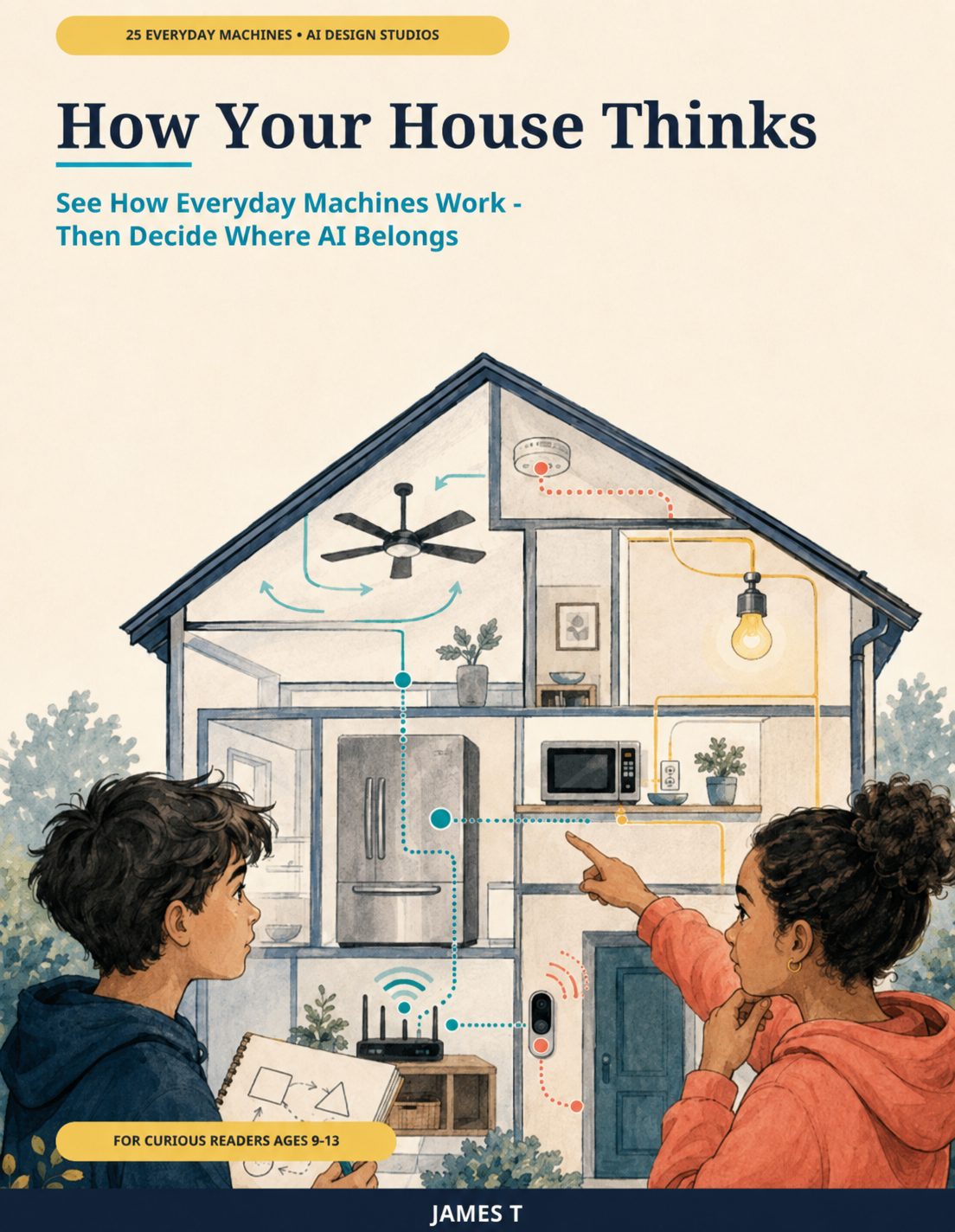
From circuit breakers and batteries to routers, thermostats, smoke alarms, and smart doorbells, every machine becomes a chance to notice, explain, imagine, and question.
See current editions on Amazon